How to spot ghost branding on a recently converted site
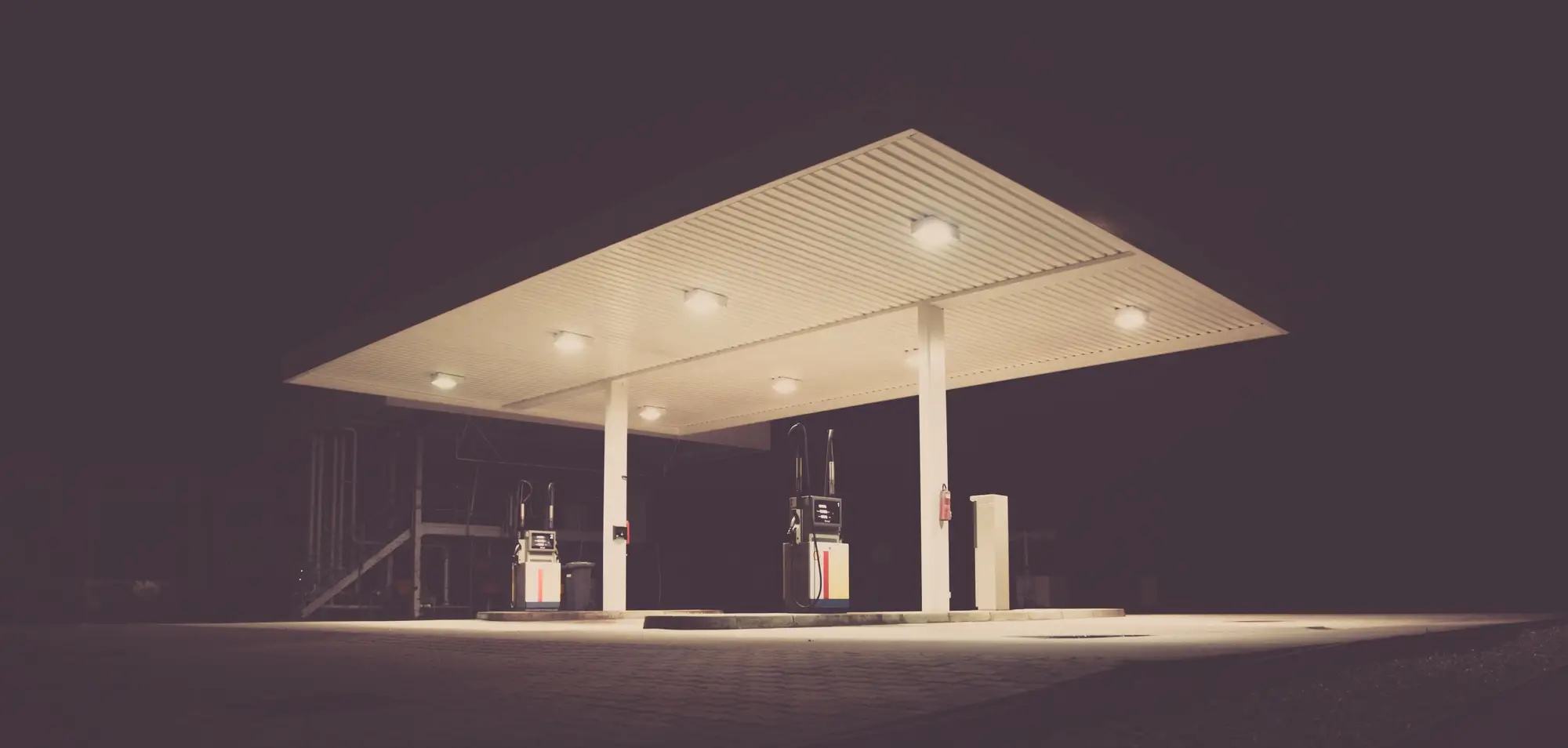
A conversion crew can swap a canopy, repaint a building, and re-skin a pylon sign in a weekend. What they don't always catch is the residue: the pieces of the old brand that get missed, painted over badly, or left up because nobody put them on the punch list. Franchisors call this ghost branding, and it shows up more often than most conversion checklists account for.
Ghost branding usually turns up as small leftover details rather than a full sign left standing: a faded outline on a fascia, an unpainted bollard, a cabinet skirt still carrying the old color. A regional manager driving past at 40 mph won't register any of that. A customer pulling in for the first time will.
Where old branding actually hides
Start with the canopy fascia. UV exposure fades paint and vinyl at different rates, so when old brand lettering comes off, you're often left with a faint outline, letters, a logo shape, a color block, where the surface underneath was protected from the sun for years. Repaint the whole fascia and this goes away. Spot-paint around where the old letters sat and it doesn't.
The pylon or pole sign is the next place to check. A lot of conversions reuse the existing cabinet and just swap the face. If the new face doesn't fully cover the old cabinet shape, or if the cabinet skirt still carries the old brand's color, that's ghost branding standing 30 feet in the air where every car on the road can see it.
Below eye level, look at curb paint and bollards. Old brand color schemes often get applied to curb stops, bollard sleeves, and the base of fuel dispensers as a matter of habit, separate from the official rebrand scope. Nobody put "repaint the bollards" on the conversion order, so they stayed red and white two years after the site went green and yellow.
Dumpster corrals and the back of the building are the classic blind spot. Conversion crews front-load their attention on what's visible from the pump island and the street. The enclosure gate, the air and vacuum station housing, the back wall facing the access road, these often still carry the old brand's proprietary paint color because nobody walks back there during a drive-by inspection.
Inside, check pump toppers, pump decals, and any permanently mounted signage near the restrooms or the door. Vinyl decals get swapped fast. Permanently screened or molded signage sometimes doesn't, because replacing it means a purchase order instead of a work order.
Why a windshield survey misses most of it
Most of these details are small, low-contrast against the surrounding surface, and easy to miss unless you're standing right next to them. A field auditor doing twelve sites in a day isn't going to climb a ladder to check the top edge of a pylon sign cabinet, and a regional manager's drive-by doesn't slow down enough to catch a sun-ghosted outline on a canopy fascia.
That's the gap between "the conversion is done" and "the conversion is done correctly." The work order gets closed out, the franchisee signs off, and the ghost branding sits there until a customer posts a photo of it, or a competing brand's field rep does, or it turns up in a corporate visit eighteen months later.
Catching this reliably across a network takes the same consistent look applied to every converted site on the same schedule, regardless of which ones a regional manager happens to drive past that quarter. That's the gap Franchise Compliance Audit is built around: a per-site condition read and a flag against the prior pass, so a fading outline on a fascia or an unpainted bollard shows up as a change instead of getting lost in the noise of a hundred other locations.
If your network has converted sites you haven't had eyes on since the work order closed, get on the waitlist for early access and see what a condition read turns up.