The canopy that passed every photo but failed the flyover
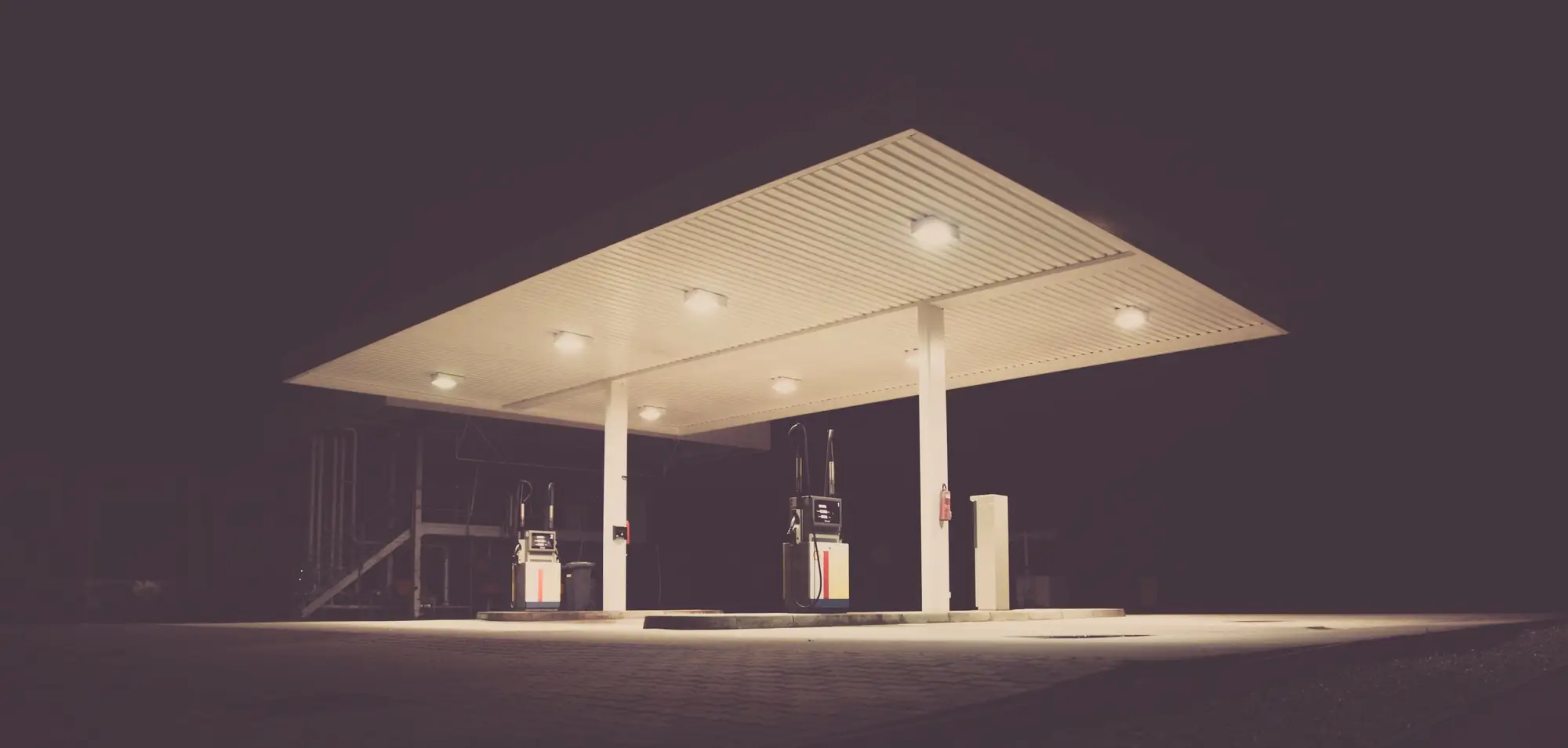
A brand standards manager I used to work with kept a folder on her desktop called "canopy problems." Not sites with problems, just canopies. She said if you want to find out where a franchise network is quietly drifting from spec, start at the top of the pumps and work down.
One example stuck with me. A site in the Southwest had turned in its annual photo set on schedule for three years straight: fascia clean, logo panel bright, the obligatory shot of the price sign with the right font. Every box checked. Then a flyover pass done for an unrelated reason, a county easement dispute, caught the same site overhead. The south-facing panel, visible only from a few hundred feet up or across six lanes of highway traffic, had sun-bleached to a color that wasn't on any swatch card, and half a letter in the brand mark had worn off entirely.
At ground level, where the submitted photos were always taken, you'd never know. The photographer, out of habit as much as anything, had shot the canopy from the angle facing away from the sun.
Nobody did anything wrong, exactly. A franchisee standing at ground level with a phone camera takes the photo that looks best, and the best-looking angle is rarely the one with the worst fading. It's just how people hold cameras, toward the good side and away from the glare.
The pattern shows up more than you'd think once you start looking for it. Ground photos are composed. Someone decides what's in frame and what isn't, usually without meaning to exclude anything, just because that's the side of the building they happened to be standing on. A roof seam patched with the wrong color tarp, visible only from above, doesn't make it into a submission because nobody climbs up to photograph their own roof. A faded logo on the back of a pole sign, facing the service road nobody uses for the entrance photo, stays invisible for years. The compliance file says one thing while the site, seen whole, says another.
What a flyover gives you that a photo packet can't is the version of the site nobody staged. Roof condition, both sides of a pole sign, the canopy from directly overhead where fading patterns are impossible to hide because there's no angle left to choose. It replaces a single, self-selected angle with a view of all four sides and the roofline nobody thinks to document.
Photo audits still earn their keep. They're cheap, they're fast, and for a lot of brand elements they do the job: a sign that's clearly the wrong font doesn't need an aircraft to spot it. The problem is narrower: some kinds of drift only show up from a vantage point nobody on the ground ever occupies. Canopy fascia is the obvious one. Roof-mounted equipment, line-of-sight sign visibility from the highway approach, the slow creep of a parking lot restriping job that never quite matched spec. These are roof-down problems, and they don't resolve from a ground-level photo no matter how thorough the franchisee is trying to be.
Franchise Compliance Audit is built around that gap specifically, an annual flyover pass across a network that flags what changed since the last one, so the canopy nobody photographed from above still gets looked at. If you've got a folder of your own canopy problems, that's the kind of pass worth getting ahead of the next renewal cycle.
Join the early access list at Franchise Compliance Audit and see what a flyover catches that the photo file didn't.